10 Best General Surgery Instruments for Global Buyers?

Choosing the right general surgery instruments requires more than comparing prices or counting pieces in a set. Surgeons need dependable control, clear visibility, ergonomic handling, and predictable performance during routine procedures. A scalpel should hold its edge. A needle holder should close evenly. A retractor should provide exposure without unnecessary tissue pressure.

The World Health Organization reports that millions of patients experience healthcare-associated harm each year, with many incidents considered preventable. Its Global Patient Safety Action Plan 2021–2030 emphasizes safer systems, reliable equipment, and competent clinical practice. That message matters for global buyers. Instrument quality can influence workflow, infection-control routines, and surgical consistency.

Market intelligence from Grand View Research and Fortune Business Insights indicates continued growth in surgical instruments, supported by hospital expansion, outpatient procedures, and replacement demand. However, market growth does not prove that every popular product deserves a place in an operating room. That assumption needs challenging. Buyers should examine material grade, balance, joint movement, corrosion resistance, packaging, warranty support, and documented quality controls. FDA guidance on reusable medical-device reprocessing also highlights the importance of validated cleaning, disinfection, and sterilization instructions. ISO 17664-1 offers a useful reference for processing information.

This guide reviews ten widely used categories of general surgery instruments for international procurement teams. It considers practical performance, maintenance demands, supplier transparency, and operating-room realities. Local registration requirements still differ. No universal ranking exists. The right choice depends on procedure volume, surgical specialty, sterilization capacity, and available training. Small details matter. A stiff clamp, loose hinge, or unclear instruction can create avoidable friction when precision matters most.
10 Best General Surgery Instruments for Global Buyers?

What Defines a High-Quality General Surgery Instrument?

High-quality general surgery instruments must perform reliably under pressure, not merely look polished. Surgical-grade stainless steel should resist corrosion, pitting, and repeated sterilization. ISO 7153-1:2016 identifies material safety and suitability as core requirements for surgical instruments. Buyers should also inspect jaw alignment, ratchet engagement, handle balance, and smooth movement. A clamp that closes unevenly can damage tissue or compromise hemostasis. Small defects matter.

The World Health Organization reported an estimated surgical-site infection incidence of 11.8 cases per 100 operations in low- and middle-income countries. Instrument cleanliness and effective reprocessing are therefore practical safety issues, not purchasing details. AAMI ST79 recommends validated steam-sterilization practices and routine quality controls. Traceability helps hospitals identify damaged instruments, failed cycles, and replacement needs. Still, no checklist catches every subtle defect. Human inspection remains necessary.

Tips: Request material certificates, reprocessing instructions, and inspection records. Test representative samples before large orders. Examine serrations under magnification. Check whether box locks move without grinding. Ask how many sterilization cycles the instrument is designed to tolerate. Do not judge quality by weight alone; excessive heaviness can increase fatigue. A perfect instrument is unrealistic, and field feedback should refine specifications over time.

Ten Essential General Surgery Instruments and Their Primary Uses

Ten Essential General Surgery Instruments and Their Primary Uses

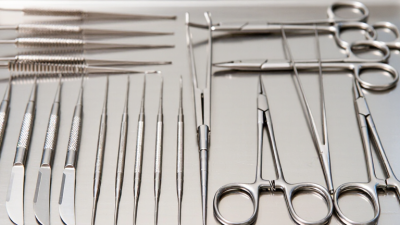
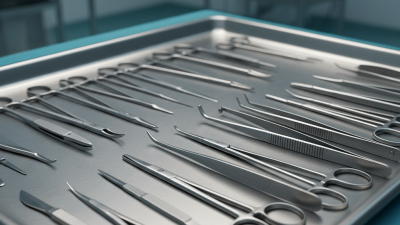
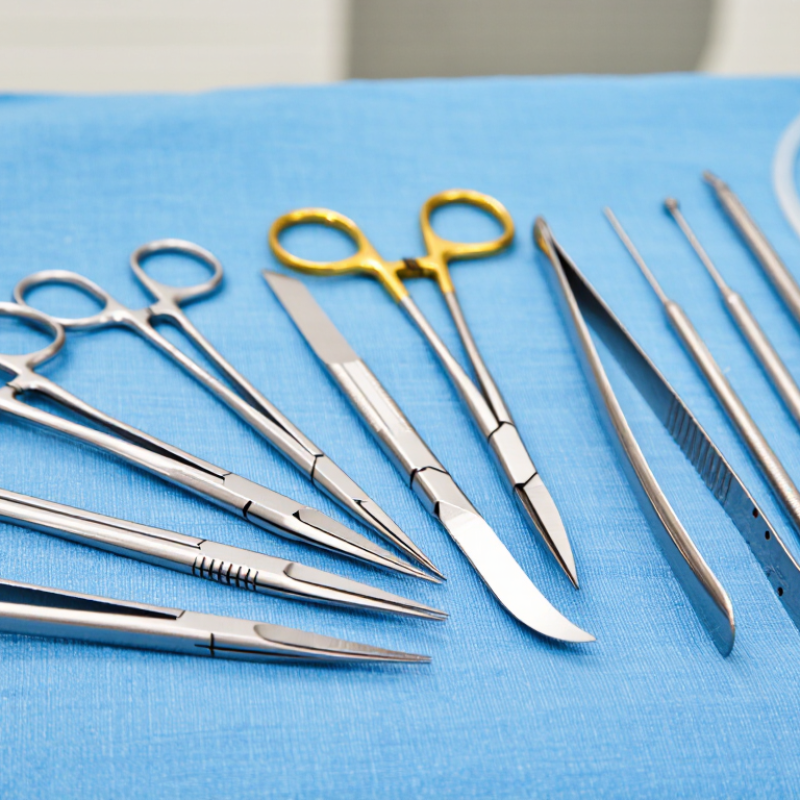
A practical general surgery set begins with the scalpel for controlled skin incisions. Mayo scissors cut dense tissue and sutures. Metzenbaum scissors handle delicate dissection. Adson forceps grasp skin edges with limited trauma. Tissue forceps provide firmer handling during exposure. A hemostatic clamp compresses bleeding vessels. A needle holder secures the needle during wound closure. Small details matter.

Retractors hold tissue aside and improve visibility. A suction cannula removes blood and irrigation fluid. An electrosurgical pencil can cut tissue or control bleeding when approved equipment and trained staff are available.

These ten instruments support many routine procedures, but no universal set fits every operating room. A neat list can mislead. Procedure type, patient condition, surgeon experience, and sterilization capacity must guide purchasing.

The Lancet Commission on Global Surgery estimated that about five billion people lacked access to safe, affordable surgical and anesthesia care in 2015.

Reliable, reusable instruments can support service continuity, but only with inspection, maintenance, and validated reprocessing.

The World Health Organization’s 2009 Surgical Safety Checklist study reported complications falling from 11.0% to 7.0% across eight hospitals. That evidence reinforces a broader lesson: instruments work best within disciplined systems. Some facilities still overlook handle comfort and tray weight. That deserves correction.

Key Features, Materials, and Design Considerations

10 Best General Surgery Instruments for Global Buyers

The ten core choices include scalpels, dissecting scissors, tissue forceps, hemostatic forceps, needle holders, retractors, suction cannulas, dressing forceps, surgical probes, and electrosurgical pencils. Each tool needs a clear purpose, balanced handling, and reliable performance under repeated sterilization. Stainless steel remains common because it resists corrosion and supports precise machining. Tungsten carbide inserts can improve needle-holder grip, but they increase replacement costs. Some instruments also use titanium for lighter weight and reduced magnetic response.

Design details matter in daily practice. Serrated jaws should align evenly without excessive pressure. Scissor blades must meet smoothly from hinge to tip. Ring handles should fit gloved fingers, while ratchets need controlled release.

A mirror finish simplifies cleaning, but it can create glare under operating lights. Matte surfaces reduce glare, yet they may show stains more easily. No instrument fits every surgical team. We once valued appearance too highly and missed a weak hinge. That mistake changed our inspection process.

Tips: Request samples before volume purchasing. Test grip, jaw closure, balance, and cleaning access. Check material certificates, traceability records, sterilization compatibility, and applicable regional requirements. Ask how the supplier verifies hardness and corrosion resistance. Keep written acceptance criteria. Small differences become obvious after repeated use.

How to Compare Surgical Instruments for Global Procurement

For global buyers, “best” does not mean the sharpest instrument. It means reliable performance across different operating rooms. Compare ten core groups: scalpels, scissors, forceps, needle holders, clamps, retractors, suction tips, dilators, curettes, and trocar accessories. Score each group for jaw alignment, grip comfort, cutting consistency, corrosion resistance, and repairability. A smooth box lock matters; rough movement can fatigue surgeons during long procedures.

The Lancet Commission on Global Surgery estimated that five billion people lack access to safe, affordable surgical care. It also identified a need for 143 million additional procedures annually. These figures make durability and service support more than purchasing details. Buyers should request material specifications, sterilization-cycle evidence, inspection instructions, and traceability records. ISO 13485 quality systems can support consistency, while AAMI ST79 emphasizes cleaning, inspection, packaging, and sterilization controls. Specifications still need verification.

Price alone can mislead. A low-cost clamp may develop stiffness after repeated autoclave cycles, while a slightly heavier instrument may offer steadier handling. Ask for samples and test them with gloves, wet hands, and standard trays. Measure hinge play after repeated use. That step is often skipped. The WHO Global Patient Safety Action Plan 2021–2030 stresses safer systems, but procurement teams sometimes focus only on unit price. I would not treat any catalogue score as final. Local water quality, technician skills, and replacement access can change real performance. A practical comparison should record failure rates, turnaround time, and user feedback from surgeons and sterile-processing staff.

Safety, Sterilization, Compliance, and Supplier Evaluation

10 Best General Surgery Instruments for Global Buyers

Safety, Sterilization, Compliance, and Supplier Evaluation

A practical surgical set may include scalpel handles, scissors, tissue forceps, hemostats, needle holders, retractors, suction tips, dilators, curettes, and trocars. Each instrument should match the procedure, tissue type, and local operating conditions. Edge alignment matters. So does grip security. The World Health Organization’s 2022 Global Report on Infection Prevention and Control links effective infection prevention programs with substantial reductions in healthcare-associated infections. That makes instrument design and reprocessing equally important.

Sterilization claims require evidence, not attractive brochures. The CDC recommends steam sterilization for heat-resistant critical instruments, when compatible with the manufacturer’s validated instructions. Buyers should request cleaning studies, material specifications, sterilization limits, and packaging guidance. A supplier should also provide lot traceability, inspection records, and clear instructions for use. Small hinges can retain biological residue. That detail is often underestimated.

Compliance needs local verification. ISO 13485 certification supports quality management, but it does not replace product registration or performance checks in the destination market. Ask for relevant conformity documents, risk-management files, and post-market complaint procedures. The WHO’s 2016 surgical-site infection guideline emphasizes standardized prevention practices, yet real hospitals rarely operate perfectly. Reprocessing failures still happen. Supplier audits, sample testing, and staff training may expose weaknesses before delivery. Price alone is a poor purchasing metric. Sometimes, the cheapest instrument becomes the most expensive after repeated repair, corrosion, or failed sterilization cycles.

10 Best General Surgery Instruments for Global Buyers? - Safety, Sterilization, Compliance, and Supplier Evaluation

Practical comparison for procurement teams evaluating reusable general-surgery instruments. Selection should be confirmed against the intended procedure, local regulations, and the manufacturer’s validated instructions for use.

Instrument Primary Surgical Use Typical Material Supply Format Cleaning and Sterilization Considerations Safety Checkpoints Compliance Evidence to Request Supplier Evaluation Criteria
Scalpel Handle No. 3 or No. 4 Holds a compatible disposable blade for controlled skin and soft-tissue incisions. Medical-grade stainless steel; surface finish should resist corrosion and staining. Reusable handle
Disposable blade
Remove the blade before processing. Clean promptly to prevent dried bioburden. Steam sterilize the reusable handle only according to its validated IFU. Check blade-seat compatibility, secure locking, handle straightness, and absence of sharp burrs on non-cutting surfaces. Material specification; validated reprocessing instructions; quality-management documentation; applicable market authorization. Dimensional consistency, blade-fit testing, corrosion resistance, traceability by lot, and secure packaging.
Mayo Dissecting Scissors Cutting dense fascia, sutures, dressings, and heavier tissue, depending on the pattern and tip design. Hardened surgical stainless steel with precision-ground cutting edges. Reusable Open fully during cleaning. Use an instrument washer when validated. Lubricate the joint with a steam-compatible surgical-instrument lubricant if required by the IFU. Verify smooth opening, correct blade alignment, controlled cutting through the length of the blades, and no surface pitting. Reprocessing validation; material and hardness information; inspection and maintenance instructions; applicable conformity documentation. Cutting performance after repeated cycles, joint durability, passivation quality, repair policy, and sample inspection before purchase.
Metzenbaum Dissecting Scissors Fine dissection and cutting of delicate soft tissue. Precision stainless steel; slender profiles require careful handling to prevent bending. Reusable Keep tips protected during transport and cleaning. Use neutral or mildly alkaline cleaning chemistry compatible with the instrument and follow the validated sterilization cycle. Inspect fine tips for bending, nicks, misalignment, and excessive joint resistance. Do not use for heavy materials if not designed for that purpose. Validated cleaning and sterilization instructions; material specification; inspection criteria; quality-system evidence. Tip accuracy, atraumatic action, cycle-life data, protective packaging, and availability of maintenance or sharpening services.
Adson Tissue Forceps Grasps skin and superficial tissue during suturing and wound handling. Stainless steel, commonly with toothed or smooth opposing tips. Reusable Clean between the teeth and serrations using a soft brush or validated automated process. Steam sterilization is generally suitable when permitted by the IFU. Confirm teeth meet evenly without excessive sharpness, tips are not bent, and the grip is secure without unnecessary tissue crushing. Material and surface-finish specification; reprocessing IFU; risk-based design documentation; applicable regulatory records. Tip alignment, grip consistency, resistance to corrosion, ergonomic profile, and inspection sampling plan.
Tissue Forceps, 1 × 2 Teeth Firm handling of skin and tough tissue where a toothed grip is required. Medical-grade stainless steel with accurately formed teeth. Reusable Remove visible soil immediately after use. Pay particular attention to the tooth recess and hinge-free gripping area. Process in an open position where applicable. Check that teeth are undamaged and meet correctly; reject instruments with bent tips, cracks, rough edges, or corrosion. Reprocessing instructions; material declaration; inspection and acceptance criteria; documented quality controls. Tooth geometry, grip repeatability, surface passivation, packaging protection, and replacement lead time.
Needle Holder Holds and drives surgical needles during tissue closure. Stainless steel; jaws may have textured or carbide-enhanced gripping surfaces, depending on design. Reusable Open the ratchet fully for cleaning. Remove trapped debris from the jaws. Do not use abrasive cleaners that can damage the gripping surface. Test ratchet engagement, jaw alignment, needle-holding force, hinge movement, and absence of jaw damage before use. Jaw-material details; validated reprocessing IFU; mechanical-performance testing; traceability and conformity records. Needle-grip consistency, ratchet life, jaw wear after repeated cycles, ergonomic design, and repair or replacement support.
Kelly Hemostatic Forceps Temporary clamping of vessels or tissue during hemostasis and dissection. Stainless steel with serrated jaws and a ratchet mechanism. Reusable Unlock and open the ratchet during cleaning. Flush and brush the serrations. Ensure complete drying before packaging and sterilization. Inspect jaw alignment, serration condition, ratchet security, and smooth release. Avoid excessive force that could damage tissue or the instrument. Mechanical inspection criteria; reprocessing validation; material and corrosion-resistance information; quality-system records. Clamp-force consistency, ratchet durability, corrosion performance, inspection frequency, and availability in required sizes.
Babcock Tissue Forceps Atraumatic grasping of delicate tubular or soft structures, subject to the surgeon’s technique. Stainless steel with fenestrated, rounded jaws. Reusable Clean the fenestrated jaws thoroughly and verify that no tissue remains in the opening. Use validated steam sterilization when compatible with the IFU. Check rounded jaw edges, alignment, ratchet release, and atraumatic contact surfaces. Do not use if the jaws are sharp, cracked, or distorted. Reprocessing IFU; jaw-design specifications; mechanical testing; risk-management and regulatory documentation. Atraumatic jaw finish, consistent closure, fatigue resistance, corrosion control, and protective packaging.
Allis Tissue Forceps Firmly holds tissue edges or specimens where a toothed grip is clinically appropriate. Stainless steel with interlocking teeth and a ratchet. Reusable Open the ratchet and clean between the teeth with a suitable soft brush. Inspect carefully after cleaning because retained soil can be difficult to see. Confirm tooth alignment, secure ratchet action, and absence of damaged or excessively sharp projections outside the intended gripping area. Design and material specifications; validated reprocessing procedure; inspection criteria; applicable conformity documentation. Tooth durability, ratchet reliability, corrosion resistance, size availability, and documented lot traceability.
Army-Navy Retractor Manual retraction of wound edges and superficial tissue during exposure. Stainless steel with smooth or fenestrated blades, depending on configuration. Reusable Clean all blade surfaces and fenestrations. Inspect for retained soil, scratches, deformation, and sharp edges. Steam sterilize according to the validated IFU. Check blade symmetry, edge smoothness, handle integrity, and adequate rigidity. Use controlled force to reduce tissue trauma. Material specification; dimensional and mechanical inspection records; reprocessing IFU; regulatory and quality documentation. Blade geometry, rigidity, finish quality, resistance to bending and corrosion, packaging, and replacement availability.
Procurement note: Reusable instruments should be supplied with clear, instrument-specific instructions for cleaning, disinfection, inspection, packaging, sterilization, storage, and maintenance. Steam sterilization parameters must be taken from the current validated instructions for use rather than assumed from a generic cycle. For global purchasing, request evidence of an established medical-device quality system, risk management, traceability, conformity assessment for the destination market, and documented post-market support.