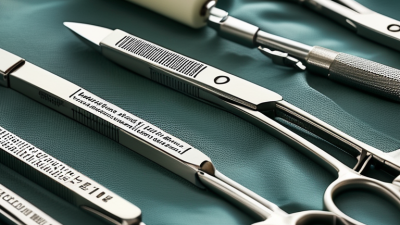
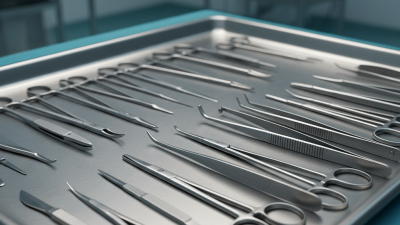
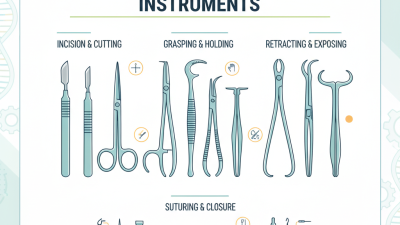
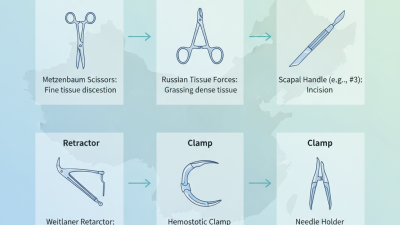
Choosing the best list of surgical tools from China requires more than comparing prices or counting items. A reliable selection begins with clinical purpose, material quality, manufacturing consistency, and supplier transparency. Scalpels, tissue forceps, needle holders, retractors, scissors, and suction instruments each demand different performance checks. A delicate iris scissor should close smoothly, while a heavy retractor must resist bending under controlled pressure.
Surgeon and patient-safety researcher Atul Gawande wrote, “A checklist ... provides a kind of cognitive net.” That idea applies directly to evaluating a list of surgical tools. Buyers should verify stainless-steel grades, surface finishing, joint alignment, jaw grip, laser markings, packaging, and sterilization instructions. ISO 13485 certification can support confidence, but it should not replace product inspection. Certificates may be current while individual batches still vary.
This guide examines how Chinese manufacturers compare across general surgery, orthopedics, dental procedures, and minimally invasive practice. It considers factory experience, quality-control records, sample testing, traceability, and after-sales support. A dependable supplier should explain tolerances, reprocessing limits, and replacement procedures clearly. Ask for inspection reports.
No list is perfect.
Some tools may look polished yet feel poorly balanced in the hand. Others may perform well but lack clear documentation. That is where careful sampling matters. Independent testing, surgeon feedback, and controlled trial use can reveal weaknesses that catalogs hide. The best list of surgical tools is therefore not the longest one. It is the most appropriate, verifiable, and consistently manufactured set for a defined clinical need.
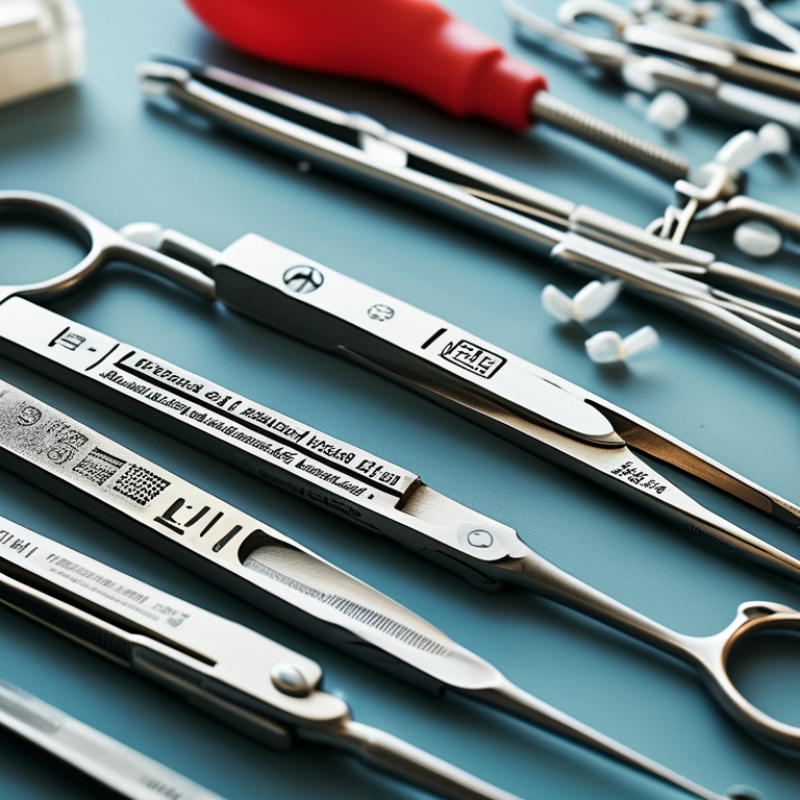
A high-quality surgical tool from China is defined by controlled performance, not its country of origin. In practical evaluations, buyers should inspect instruments under bright, neutral light. Look for smooth jaws, even serrations, clean hinges, and consistent alignment. Scissors should cut test material without pulling or crushing it. Forceps should close evenly. Small defects matter.
Material traceability is essential. Reliable manufacturers can identify the steel grade, heat-treatment record, production batch, and inspection results. Stainless steel should resist corrosion after repeated cleaning and sterilization, when used as instructed. Passivation, hardness checks, dimensional testing, and functional trials provide useful evidence. A certificate helps. It does not replace inspection. This is where purchasing decisions can become too optimistic.
Quality also depends on process discipline. ISO 13485-based systems, risk controls, validated cleaning guidance, and corrective-action records may show mature oversight. Ask for sample instruments, not only photographs. Test the grip, balance, locking mechanism, and durability through repeated use. Packaging should protect tips from impact and contamination. Supplier communication matters too; unclear answers about tolerances deserve attention. No evaluation is perfect. A tool may pass visual checks and still feel awkward in a surgeon’s hand. Clinical users should review usability before large-scale procurement.
China commonly manufactures reusable hand instruments, including forceps, scissors, needle holders, retractors, and clamps. It also produces laparoscopic instruments, electrosurgical accessories, orthopedic tools, dental instruments, suction systems, and sterilization containers. Grand View Research valued the global surgical instruments market at approximately USD 16 billion in 2023, showing strong demand for standardized, cost-controlled production.
The China Medical Device Industry Association reported that China’s medical-device market exceeded RMB 1 trillion in recent years. This scale supports specialized machining, stamping, surface treatment, and clean assembly. In practice, quality varies between factories. A polished instrument may still show weak jaw alignment or rough hinge movement. No list is perfect. Buyers should inspect samples, material certificates, dimensional records, and sterilization compatibility. ISO 13485 certification helps, but it does not replace product-level testing.
Tips: Request five to ten samples from the same production batch. Check cutting performance, locking force, corrosion resistance, and repeated reprocessing results. For laparoscopic tools, examine insulation near the tip and test handle ergonomics. Verify ISO 14971 risk documentation and destination-market registration requirements. The WHO Global Patient Safety Action Plan emphasizes safer surgical systems, yet supplier audits remain essential. Paperwork can look complete. Hands-on inspection reveals more.
What Is the Best List of Surgical Tools from China?
How to Evaluate Materials, Precision, and Manufacturing Standards
A reliable surgical tool list should begin with material evidence, not attractive photographs. Stainless steel grades such as 316L should include documented composition, corrosion resistance, and heat-treatment records. Titanium instruments require similar verification, especially for strength, weight, and surface stability. Check the material certificate against independent test results when possible. Small details matter.
Precision is visible in the instrument’s movement. Scissors should close smoothly without grinding or excessive side play. Forceps need aligned tips, consistent tension, and clean serrations. Measure critical dimensions with calibrated gauges, not casual visual inspection. Surface finish should be even, free from burrs, pits, discoloration, and trapped polishing compound. A polished sample can mislead.
Manufacturing reliability depends on controlled processes. Look for documented inspection plans, batch traceability, cleaning validation, passivation records, and packaging controls. Quality systems aligned with ISO 13485 can indicate disciplined production, but certification alone proves little. Ask how nonconforming tools are handled and whether corrective actions are recorded. Independent audits and sample testing add confidence. Still, no checklist is perfect. A supplier may meet dimensional tolerances while missing ergonomic weaknesses that appear after repeated use. Practical evaluation should include simulated handling, sterilization cycles, and feedback from qualified clinical users. That final step is often underestimated.
Choosing the best surgical tools from China requires more than comparing catalog prices. Supplier evaluation should begin with product purpose, material, manufacturing control, and documentation.
Request samples of the exact instruments you may purchase. Inspect jaw alignment, hinge movement, surface finish, and handle balance. Fit matters. A 4.5-inch forceps should close smoothly without sideways movement. Scissors should cut consistent layers of gauze, not only the first edge. Ask for material specifications, hardness ranges, batch traceability, and inspection records. Reliable suppliers should explain their quality system clearly and provide relevant certificates for your target market. Documentation must be verified, not simply accepted because it looks official.
Compare suppliers by communication, customization control, and response to defects. Can they repeat the same dimensions across several batches? Do they protect delicate tips during packaging? Request a sample inspection report with measurements, photos, and lot numbers. Confirm compatibility with your cleaning and sterilization process. Some finishes may discolor after repeated processing. This detail is easy to miss. Price also needs context. A cheaper instrument may require more frequent sharpening or replacement. Still, a higher quote does not automatically prove better quality. I have found that supplier promises can sound precise while practical answers remain vague. Ask uncomfortable questions, record every response, and test products under realistic handling conditions before placing a larger order.
| Surgical Tool Category | Typical Clinical Use | Common Material Options | Important Product Features | Reusable or Single-Use | Key Quality and Compliance Evidence to Request | Supplier Comparison Points |
|---|---|---|---|---|---|---|
| Surgical Scissors | Cutting tissue, sutures, dressings, and surgical materials. | Martensitic stainless steel such as 410 or 420 grades; tungsten-carbide inserts may be used for selected cutting edges. | Sharpness, smooth opening and closing, accurate blade alignment, secure finger rings, and resistance to corrosion after reprocessing. | Usually reusable; some procedure-specific scissors are supplied as single-use devices. | Material specification, dimensional inspection records, cutting-performance testing, passivation information, and validated cleaning or sterilization instructions. | Compare cutting consistency, edge durability, joint smoothness, finishing quality, repair support, and sample approval procedures. |
| Hemostatic Forceps | Clamping blood vessels or tissue and controlling bleeding during surgery. | Commonly stainless steel selected for strength, hardness, and corrosion resistance. | Reliable ratchet engagement, atraumatic jaw closure, accurate jaw serrations, proper hinge tension, and stable locking performance. | Usually reusable. | Hardness and functional test records, jaw alignment inspection, corrosion-resistance testing, surface-finish requirements, and reprocessing instructions. | Compare locking reliability, jaw profile accuracy, hinge performance, batch-to-batch consistency, and inspection coverage. |
| Tissue and Dressing Forceps | Holding tissue, sutures, dressings, or other materials during surgical procedures. | Stainless steel; atraumatic tissue patterns may use fine, rounded, or specially shaped tips. | Tip alignment, grip strength, atraumatic handling, comfortable handling, and smooth external surfaces without burrs. | Usually reusable. | Dimensional drawings, tip-alignment inspection, surface-finish criteria, material certificates, and functional sampling records. | Compare tip precision, grip without excessive tissue damage, handle ergonomics, corrosion resistance, and customization capability. |
| Needle Holders | Holding and driving surgical needles during suturing. | Stainless steel; tungsten-carbide jaw inserts are commonly used when enhanced needle grip and wear resistance are required. | Secure needle retention, accurate jaw alignment, stable ratchet action, appropriate jaw length, and a smooth, controlled hinge. | Usually reusable. | Insert-bonding or insert-fitting inspection, jaw hardness data, functional testing with specified needle sizes, and reprocessing instructions. | Compare needle-gripping performance, insert durability, ratchet reliability, handle balance, and availability of replacement or repair service. |
| Retractors | Holding back tissue or organs to improve visibility and access to the operative field. | Stainless steel; selected designs may include polymer components or silicone protection elements. | Stable blade geometry, atraumatic edges, adequate rigidity, ergonomic handles, and secure positioning during use. | Usually reusable; some specialized retractors may be single-use. | Dimensional and load testing, material declarations, surface-finish inspection, cleaning validation information, and packaging integrity data where applicable. | Compare rigidity, blade profile, operating comfort, weight, corrosion resistance, and compatibility with the intended procedure. |
| General Surgical Clamps | Grasping, holding, occluding, or manipulating tissue and surgical materials. | Stainless steel selected according to required strength, elasticity, and corrosion resistance. | Controlled jaw pressure, atraumatic or serrated jaw options, reliable closure, and smooth articulation. | Usually reusable. | Functional closure testing, jaw alignment records, material certificates, corrosion testing, and validated processing information. | Compare pressure consistency, jaw-pattern accuracy, handle comfort, finish quality, and inspection standards. |
| Bone Rongeurs and Osteotomes | Removing, cutting, or shaping bone in orthopedic, neurosurgical, and dental procedures. | Hardened stainless steel; cutting edges require suitable hardness and toughness for the intended application. | Sharp and durable cutting edge, controlled jaw movement, strong hinge, ergonomic grip, and resistance to deformation. | Usually reusable. | Hardness testing, cutting-performance evaluation, dimensional inspection, material traceability, and cleaning and sterilization instructions. | Compare edge retention, jaw strength, operating force, hinge durability, and service support for sharpening or repair. |
| Osteotomes and Surgical Chisels | Cutting or shaping bone with manual force or a surgical mallet. | Hardened stainless steel or other documented surgical-grade metal suitable for impact loading. | Impact-resistant construction, stable cutting edge, balanced handle, clear size identification, and controlled deformation resistance. | Usually reusable. | Material and hardness reports, impact or edge-retention testing, dimensional inspection, surface-finish requirements, and reprocessing instructions. | Compare edge durability, handle design, size accuracy, resistance to mushrooming, and traceability of heat treatment. |
| Laparoscopic Instruments | Grasping, dissecting, cutting, clipping, or suturing through minimally invasive access ports. | Stainless steel shafts and jaws; polymer insulation and specialized alloys may be used depending on the design. | Insulation integrity, precise jaw movement, shaft rigidity, ergonomic handle action, low-friction rotation, and compatibility with the intended trocar size. | Reusable or single-use, depending on the design and validated reprocessing requirements. | Electrical safety or insulation testing where applicable, dimensional compatibility data, leakage testing, functional-cycle testing, and validated reprocessing instructions. | Compare articulation accuracy, insulation durability, cycle-life data, cleaning access, trocar compatibility, and replacement-part availability. |
| Electrosurgical Accessories | Cutting, coagulation, or tissue sealing when used with compatible electrosurgical equipment. | Conductive metal components with documented insulation and, where applicable, polymer components suitable for the specified electrical conditions. | Connector compatibility, insulation integrity, controlled energy delivery, secure attachment, and clear intended-use labeling. | Commonly single-use, although some accessories may be reusable if specifically designed and validated for reprocessing. | Electrical safety testing, biocompatibility information for patient-contacting materials, compatibility data, packaging validation, and applicable regulatory documentation. | Compare equipment compatibility, electrical performance, packaging quality, shelf-life evidence, and lot traceability. |
| Basic Instrument Sets | Providing a coordinated group of instruments for general surgery, minor procedures, or specialty applications. | Usually a combination of documented stainless-steel grades; inserts and non-metal components should be separately identified. | Consistent instrument sizes, organized tray layout, clear identification, uniform finish, and efficient cleaning access. | Usually reusable; set contents should be specified individually. | Complete packing list, instrument-level specifications, material certificates, inspection records, tray or container information, and reprocessing instructions for the full set. | Compare set completeness, interchangeable replacements, packaging configuration, customization limits, lead time, and after-sales support. |
When evaluating surgical tools from China, buyers should verify the manufacturer’s quality system before comparing prices. ISO 13485 certification is a useful starting point, but it is not proof of perfect instruments. The ISO Survey 2022 recorded 26,547 ISO 13485 certificates worldwide, showing the standard’s broad adoption. Ask for the certificate number, issuing body, scope, and expiry date. Confirm that the scope covers surgical instruments, not only unrelated medical products.
Check product-specific evidence. Depending on the destination market, this may include CE documentation, UKCA records, FDA registration details, or other national approvals. Registration alone does not confirm product quality. Review material certificates for stainless steel grades, hardness reports, passivation records, and sterilization validation when applicable. A reliable supplier should also provide lot traceability, inspection records, and samples from current production.
Look closely at the hinges and tips. They should move smoothly, align correctly, and show no burrs or uneven polishing. Request testing for corrosion resistance, repeated-use performance, and dimensional accuracy. ISO 2859-1 sampling plans can support incoming inspection, while ISO 14971 helps assess medical-device risks. FDA recall reporting also shows that certified systems cannot eliminate failures. That is an uncomfortable point. Buyers should audit corrective-action records, not merely collect certificates. A factory may pass a document review and still disappoint during repeated cleaning cycles. Trial orders, independent laboratory testing, and periodic supplier audits remain necessary.