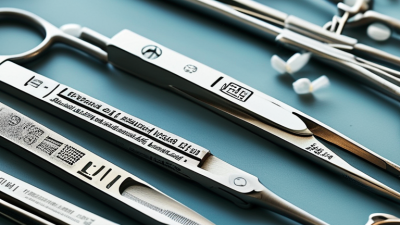
How to Choose OT Instruments for Global Buyers?

Choosing OT instruments for global buyers requires more than comparing catalog prices. Occupational therapy tools must fit clinical goals, user abilities, local workflows, and maintenance capacity. The WHO and UNICEF Global Report on Assistive Technology estimates that more than 2.5 billion people need assistive products today. That figure may exceed 3.5 billion by 2050. This growth increases demand for reliable, adaptable, and properly documented OT instruments.

A professional evaluation should examine material safety, ergonomic design, cleaning methods, adjustment ranges, and expected service life. A hand-therapy kit, for example, should include clear resistance levels, durable grips, and instructions that remain understandable after translation. Buyers should also review supplier quality systems, batch traceability, warranty terms, and replacement-part availability. ISO 13485 certification can support confidence in a manufacturer’s quality management system. However, certification alone does not prove that every instrument suits a specific therapy setting. That distinction matters.

Shipping conditions create another practical challenge. Humidity, temperature changes, customs documentation, and inconsistent after-sales support can affect product value. The World Health Organization emphasizes appropriate selection, training, and maintenance across medical-device procurement. A low purchase price may become expensive when therapists cannot repair or safely reuse a product. No checklist is perfect. Local clinicians should test samples with real users before large orders. Even then, feedback can be incomplete, especially when rural facilities have limited staffing. Global buyers should therefore combine published evidence, supplier verification, hands-on trials, and risk-based purchasing. The strongest decision is not always the cheapest one. It is the choice that remains safe, usable, and supportable after delivery.

How to Choose OT Instruments for Global Buyers?

Understanding OT Instruments and Their Applications

Occupational therapy (OT) instruments support assessment, rehabilitation, and daily-life training. They may include grip dynamometers, sensory tools, therapy putty, balance equipment, and adaptive living aids. The right selection depends on the user, setting, and treatment goal. A hand-strength device suits a clinic, but may be unsuitable for pediatric sensory work. Small details matter, including handle texture, measurement range, cleaning method, and storage space.

The World Health Organization reports that 2.4 billion people may benefit from rehabilitation services worldwide. Its Global Report on Assistive Technology estimates that more than 2.5 billion people need assistive products. That figure could exceed 3.5 billion by 2050. These findings show why buyers should evaluate application coverage, not only unit price. Instruments should support measurable outcomes, safe use, and repeated training. For example, a grip dynamometer needs clear readings, stable calibration, and comfortable contact surfaces.

Procurement teams should also check training materials, replacement parts, warranty terms, and local technical support. Safety documentation and applicable medical-device requirements deserve careful review. In my assessment, buyers sometimes overvalue a long instrument list. That can create unused equipment and confusing workflows. Fewer, well-matched tools may deliver better clinical value. Still, product selection is not perfect. User feedback, therapist observation, and outcome data should guide later adjustments. WHO rehabilitation reports provide useful context, but local patient needs remain decisive.


Identifying Clinical, Operational, and User Requirements

Choosing operating theatre (OT) instruments for global buyers starts with the clinical task, not the catalog.

Define the procedure, tissue type, required precision, and expected force. WHO’s Global Patient Safety Report 2024 states that about one in ten patients experiences harm in healthcare. More than half of this harm is preventable. Instrument geometry, reliable locking, and clear visual inspection therefore deserve serious attention. A clamp that feels acceptable during a short demonstration may cause fatigue during a long procedure. That detail is easy to miss.

Operational requirements are equally practical. Check sterilization compatibility, tray capacity, packaging, storage conditions, repair access, and replacement lead times. The WHO/UNICEF Joint Monitoring Programme reported that 1.7 billion people lacked basic hygiene services in healthcare facilities in 2022. Buyers should examine cleaning instructions, surface finishes, and reprocessing workflows, especially where water quality or equipment varies. A technically excellent instrument may still fail in a busy facility.

User requirements need direct observation. Ask surgeons, nurses, sterile-processing staff, and maintenance teams to test grip, balance, visibility, and identification markings. Include left-handed users where possible. Training needs also vary across regions. Overconfident specifications can hide local realities. We have sometimes treated user feedback as a final check, when it should shape the specification from the beginning. Test instruments with realistic gloves, lighting, trays, and procedure times before approval.

Comparing Instrument Types, Features, and Performance Standards

Choosing OT instruments for global procurement requires more than comparing prices. The instrument type must match the procedure, tissue handling, and operating conditions. Scalpels support precise cutting, while forceps differ in grip, jaw pattern, and atraumatic handling. Retractors require stable pressure without damaging surrounding tissue. Familiar shapes can still perform differently.

Experienced buyers examine material grade, surface finish, balance, and joint movement. Stainless steel should resist corrosion after repeated cleaning cycles. Hinged instruments should open smoothly without side play. Serrations need consistent alignment. Small defects matter. A rough edge may collect residue or reduce control during delicate work. Ergonomic handles also reduce fatigue during lengthy procedures.

Performance standards make comparisons more reliable across countries. Review documented compliance with applicable medical-device rules, quality systems, and recognized standards such as ISO 13485 and ISO 7153-1. Validate sterilization compatibility, packaging integrity, traceability, and reprocessing instructions. Test samples under realistic conditions before approving large orders. A product may pass a specification sheet yet feel unbalanced in a surgeon’s hand. That gap deserves attention. Ask for inspection records, material certificates, and performance data, but do not treat paperwork as proof of clinical suitability. Local regulations and hospital protocols may also differ, so technical review should involve qualified clinical and regulatory professionals.

How to Choose OT Instruments for Global Buyers?

Comparing instrument types, functional features, and performance priorities

The chart uses a practical 1–5 functional index based on common reusable operating-theatre instrument designs: 1 indicates a lower contribution to the listed criterion and 5 indicates a higher contribution. Actual procurement decisions should also verify material compatibility, sterilization instructions, cleaning access, dimensional accuracy, applicable ISO requirements, and local regulatory documentation.

Evaluating Suppliers, Certifications, Costs, and Global Compliance

Choosing occupational therapy instruments for global buyers requires more than comparing unit prices. The WHO and UNICEF Global Report on Assistive Technology estimates that 2.5 billion people need assistive products worldwide. That figure may exceed 3.5 billion by 2050. Demand is expanding, but supplier quality remains uneven. Request factory audit records, batch traceability, material specifications, and recent corrective-action reports. A polished catalog proves little.

Certifications must match the product and destination market. ISO 13485 indicates a medical-device quality management system, not automatic product approval. Ask whether testing covers biocompatibility, electrical safety, cleaning, packaging, or durability. Require current certificates from the issuing body. Check the certificate scope and expiration date. Details matter. A supplier with strong documentation may still misunderstand local labeling rules. That mistake can delay clearance.

Compare total landed cost, not quotation price. Include sampling, verification testing, translation, customs duties, freight, training, spare parts, and warranty handling. The World Bank’s Logistics Performance Index 2023 reported a median international supply-chain journey of 44 days, with about 60% spent at sea. Delivery risk can therefore outweigh a small unit-price saving. Use written quality agreements and measurable acceptance criteria. Some buyers overlook user training and cleaning instructions. I would not repeat that error. Compliance is a continuing process, not a document collected once.

Planning Procurement, Shipping, Installation, and After-Sales Support

Choosing occupational therapy (OT) instruments for global buyers requires more than comparing unit prices. WHO and UNICEF reported in the Global Report on Assistive Technology that over 2.5 billion people need assistive products worldwide. That demand makes reliable procurement essential. Define clinical goals first, such as grip training, sensory integration, or fine-motor rehabilitation. Then specify dimensions, materials, cleaning methods, load limits, and replacement parts. A cheaper kit can become expensive when one missing component stops treatment.

Shipping needs equal attention. UNCTAD’s Review of Maritime Transport 2023 notes that more than 80% of world merchandise trade moves by sea. Buyers should request protective packaging, moisture control, carton measurements, and clear customs documents. Confirm the delivery term, destination duties, and insurance before payment. For remote clinics, divide equipment into smaller, labeled cartons. It may reduce handling problems. It may also increase freight costs.

Installation should include floor-space drawings, safety checks, user training, and a simple acceptance test. IEC 62366-1 principles support considering usability and foreseeable use errors during equipment design and setup. After-sales support should define response times, spare-part availability, video guidance, and local service coverage. Keep a digital record of serial numbers and maintenance dates. The Global Medical Device Nomenclature guidance also supports consistent device identification. This is often overlooked. One practical weakness remains: buyers may approve specifications without testing real workflows. A short trial with therapists and patients can reveal awkward controls, unstable stools, or cleaning difficulties before a large international shipment leaves the warehouse.

How to Choose OT Instruments for Global Buyers? - Planning Procurement, Shipping, Installation, and After-Sales Support

OT Instrument Category Typical Procurement Package Recommended Selection Criteria Typical Lead Time Indicative Packed Size and Weight Shipping and Handling Plan Installation Requirement After-Sales Support
Basic Surgical Instrument Sets General surgery, orthopedic, gynecology, or minor procedure sets; usually supplied in stainless-steel trays with silicone mats. Medical-grade stainless steel, corrosion resistance, clear instrument count, smooth joints, laser-etched identification, and compatibility with local sterilization processes. 4–8 weeks for standard sets; 8–12 weeks for customized configurations. Approximately 45 × 35 × 20 cm per tray; 8–18 kg per tray. Use moisture-resistant inner packaging and shock-protected cartons. Confirm whether wood packaging must meet ISPM 15 requirements. No fixed installation. Local staff should verify the instrument list, tray layout, and sterilization cycle before clinical use. Request replacement availability for individual instruments, cleaning guidance, inspection checklists, and a minimum 12-month product warranty.
Operating Tables Electro-hydraulic or electro-mechanical table, mattress, head section, side rails, accessories, and operating manual. Patient weight rating, height range, lateral tilt, Trendelenburg angle, radiolucent tabletop, battery backup, electrical safety, and accessory compatibility. 8–14 weeks, depending on configuration and export documentation. Approximately 220 × 100 × 100 cm; 180–300 kg including packaging. Use reinforced export crates or pallets. Confirm doorway width, lift capacity, floor loading, and delivery access before shipment. Usually requires on-site assembly, electrical inspection, functional testing, and operator training by a qualified technician. Plan preventive maintenance every 6–12 months, spare batteries and actuators, service response targets, and remote troubleshooting procedures.
Operating Lights Single- or dual-head LED surgical light, ceiling or mobile stand, sterile handles, control panel, and backup power connection where applicable. Illuminance, color temperature, color rendering, shadow management, light-field diameter, arm movement, heat control, and electrical compatibility. 8–16 weeks for ceiling-mounted systems; 6–10 weeks for mobile models. Mobile unit: approximately 120 × 80 × 180 cm and 70–140 kg. Ceiling systems may require multiple crates. Ship in reinforced crates with protected lamp heads and articulated arms. Keep orientation markings visible and prevent excessive vibration. Ceiling-mounted systems require structural load assessment, ceiling reinforcement, electrical connection, balancing, and light-output testing. Maintain spare LED modules or control components, provide cleaning instructions, and define technician response times for critical failures.
Anesthesia Workstations Workstation, breathing system, ventilator, vaporizers, gas monitoring, accessories, and compatible patient circuits. Gas compatibility, ventilator modes, flow accuracy, alarm functions, oxygen monitoring, backup battery, local power supply, and serviceability. 10–18 weeks, subject to regulatory and configuration requirements. Approximately 100 × 85 × 150 cm; 100–180 kg. Use upright, shock-resistant packaging. Confirm hazardous-goods rules for any included gas cylinders, batteries, or chemical components. Requires gas pipeline verification, electrical safety testing, calibration, leak testing, alarm testing, and clinical user training. Require calibration intervals, preventive maintenance schedules, software or firmware support, critical spare parts, and documented service records.
Electrosurgical Units Generator, monopolar and bipolar accessories, footswitch, patient return electrodes, cables, and storage cart if required. Output modes, power range, tissue-effect control, alarm system, leakage current, accessory compatibility, and local electrical standards. 6–12 weeks for standard configurations. Approximately 60 × 50 × 45 cm; 12–30 kg per unit. Standard air freight or consolidated sea freight is generally suitable. Protect cables and footswitches from bending and crushing. Bench verification and electrical safety testing are required. Clinical staff should receive operation and safety training. Keep compatible cables, footswitches, electrodes, and fuses available. Specify repair turnaround time and calibration support.
Suction and Surgical Smoke Evacuation Vacuum regulator or pump, collection jars, tubing, bacterial filters, smoke evacuation unit, and disposable accessories. Vacuum range, airflow, noise level, filter efficiency, overflow protection, jar capacity, tubing compatibility, and cleaning requirements. 4–10 weeks for standard units; 8–12 weeks with customized accessories. Approximately 70 × 60 × 100 cm; 20–60 kg per unit. Protect pumps and plastic components from impact and extreme temperatures. Check disposable items separately for import and storage restrictions. Connect to the vacuum pipeline or install the pump, verify airflow, test overflow protection, and train users on filter replacement. Define recurring filter and tubing supply, cleaning procedures, pump maintenance, and availability of replacement collection jars.
Patient Monitoring Systems Multiparameter monitor, ECG cable, SpO₂ sensor, non-invasive blood pressure cuff, temperature probe, accessories, and mobile cart. Required parameters, screen size, alarm management, battery runtime, data connectivity, cleaning compatibility, and disposable sensor availability. 6–14 weeks, depending on configuration and local approvals. Monitor: approximately 45 × 35 × 25 cm and 8–15 kg; cart adds 10–25 kg. Suitable for air or sea freight with lithium-battery documentation where applicable. Use antistatic and moisture-protective packaging. Requires initial configuration, electrical safety test, alarm verification, network setup if used, and user orientation. Provide sensor and cable replacement plans, battery replacement intervals, software support, calibration, and technical escalation contacts.
Sterilization and Instrument Processing Equipment Tabletop or floor-standing sterilizer, washer or ultrasonic cleaner, drying unit, baskets, water-treatment accessories, and validation materials. Chamber capacity, cycle parameters, water quality, drying performance, traceability, safety interlocks, local utilities, and service access. 10–20 weeks, depending on chamber size and site requirements. Tabletop unit: approximately 70 × 70 × 60 cm and 50–90 kg; larger units require palletized shipment. Confirm drainage, water, ventilation, and electrical requirements before dispatch. Use moisture-resistant crates and protect the chamber door and controls. Requires utility connection, leveling, cycle validation, safety checks, operator training, and site acceptance testing. Plan periodic validation, gasket and filter replacement, water-quality monitoring, preventive maintenance, and emergency service coverage.
Procurement planning note: Lead times, packed dimensions, weights, installation requirements, import documents, and service intervals are typical planning ranges. Final specifications should be confirmed against the destination country’s medical-device regulations, electrical standards, hospital infrastructure, customs requirements, and approved clinical workflow.