2026 Best Surgical Tools for Global Buyers?

Choosing the best surgical tools for global buyers in 2026 will require more than comparing prices or catalog photographs. Instrument quality affects procedural control, sterilization efficiency, staff safety, and long-term operating costs. The global surgical instruments market reflects this demand. Fortune Business Insights valued it at approximately USD 14.08 billion in 2023 and projects continued growth through 2032. However, market forecasts differ across research firms. Buyers should treat projections as guidance, not certainty.

Performance matters in the operating room. A needle holder should close smoothly, scissors should cut without excessive force, and stainless-steel surfaces should resist repeated cleaning cycles. Small defects become expensive failures. Reprocessing teams also need clear instructions, compatible packaging, and traceable maintenance records. Atul Gawande, a surgeon and leading authority on surgical safety, wrote, “A checklist is not a recipe for a surgical procedure.” His point applies to instrument purchasing too. A reliable tool supports judgment; it does not replace it.

This guide evaluates surgical tools through practical and regulatory considerations. These include ergonomics, material composition, corrosion resistance, sterilization compatibility, supplier documentation, and after-sales support. ISO 13485 certification can indicate a structured medical-device quality system, but certification alone does not guarantee clinical suitability. Regional registration requirements also vary. Global buyers should verify applicable rules before ordering.

No instrument is perfect. Some premium tools may offer better balance but exceed smaller hospital budgets. Lower-cost sets may look attractive yet require earlier replacement. The strongest choice is usually the safest fit for a specific procedure, team, and reprocessing environment. Expect careful comparison, not easy answers.

2026 Best Surgical Tools for Global Buyers?

Surgical Tool Categories: Cutting, Grasping, Retracting, and Energy Systems

2026 Best Surgical Tools for Global Buyers?

Surgical tools fall into four working categories: cutting, grasping, retracting, and energy systems. Each category supports a different surgical movement.

Cutting Cutting tools need sharp, stable edges and predictable balance.
Grasping Graspers require controlled jaw pressure without damaging tissue.
Retracting Retractors must hold exposure steadily, especially during long procedures.
Energy systems Energy systems add speed, but they also demand careful heat and insulation checks.

Grand View Research estimates the global surgical instruments market reached about USD 14.3 billion in 2023. Its report projects continued growth through 2030, driven by minimally invasive procedures and hospital investment.

Buyers should examine more than unit price. Check material traceability, hinge alignment, surface finish, sterilization compatibility, and documented performance testing.

In practice, a slightly heavier instrument may reduce hand fatigue. Yet that preference is personal, not universal. I have found that catalog specifications often miss grip comfort.

Tips:

Compare each tool with its surgical task. Request sample evaluation, cleaning instructions, and test certificates. For energy systems, verify power control, insulation integrity, and compatibility with local electrical standards.

The World Health Organization identifies surgical site infection as a major patient-safety concern, so cleanability matters. A narrow box lock can trap residue. That detail is easy to overlook.

Global buyers should also confirm training support and replacement-part access before placing larger orders.

Market Evidence: WHO Estimates 234 Million Surgeries Each Year

2026 Best Surgical Tools for Global Buyers?

WHO estimates that about 234 million surgical procedures occur worldwide each year. This figure, cited in WHO safe-surgery materials, shows the scale of daily instrument demand. Every operation depends on reliable cutting, grasping, retracting, and suturing tools. Yet volume alone does not define quality. The Lancet Commission on Global Surgery estimated that five billion people lack access to safe, affordable surgical care. Procurement decisions therefore affect capacity, safety, and equity.

Global buyers should examine more than sharpness or price. Instruments need consistent dimensions, corrosion resistance, smooth joints, and clear reprocessing instructions. ISO 13485-based quality systems can support traceability and controlled manufacturing. WHO’s 2009 Surgical Safety Checklist study reported complications falling from 11.0% to 7.0% after implementation. Tools cannot replace disciplined systems. They must fit them.

A practical evaluation includes sample testing, repeated sterilization, grip comfort, and repair access. A low purchase price may become expensive after early hinge failure. That is easy to miss. The 2021 WHO Global Patient Safety Action Plan also emphasizes safer systems, learning, and risk reduction. Buyers should request material specifications, inspection records, sterilization compatibility, and documented quality controls. I would not call one tool “best” without observing it in the intended operating environment. Local staff feedback may reveal weaknesses that laboratory checks miss. Even strong specifications can fail during rushed preparation or inconsistent maintenance.

Safety Evidence: FDA Risk Classes and ISO 13485 Quality Requirements

2026 Best Surgical Tools for Global Buyers?

For global buyers, safety evidence begins with the tool’s intended use, not its appearance or low price. FDA risk classes provide a useful starting point. Class I devices usually face general controls, while Class II devices may require additional controls and premarket notification. Class III devices generally support or sustain life and require the strongest review. Classification can change with intended use, design, and claims.

A reliable supplier should explain the device classification and provide clear evidence. Request test reports, risk-management records, sterilization validation, biocompatibility data, and traceability information where relevant. For reusable instruments, inspect cleaning instructions, corrosion resistance, and repeated-cycle testing. For single-use products, check packaging integrity and shelf-life data.

Not enough.

ISO 13485 certification shows that a manufacturer operates a controlled medical-device quality system. It does not prove that every instrument is safe, effective, or legally marketable in every country. Buyers should verify the certificate’s scope, issuing body, and current status. They should also compare product claims with the actual intended use. A certificate alone can look reassuring, but it can hide gaps.

One weakness in many purchasing checklists is limited attention to post-market complaints and corrective actions. Ask how failures are investigated, documented, and communicated. Local registration, labeling, and import rules still require separate confirmation.

Look closer.

Performance Comparison: Accuracy, Force, Sterilization, and Service Life

2026 Best Surgical Tools for Global Buyers?

Performance Comparison: Accuracy, Force, Sterilization, and Service Life

For global buyers in 2026, surgical tools should be judged by measurable performance, not polished catalogs. In operating-room evaluations, accuracy starts with tip alignment and smooth jaw closure. A 0.5 mm offset can matter when handling delicate tissue or fine sutures. Repeated opening tests reveal whether the hinge returns to the same position. Small deviations become expensive over time.

Force should feel controlled, not merely strong. A reliable instrument transfers pressure evenly across the working end, reducing crushing and hand fatigue. Testers can compare grip force, closure force, and slippage using calibrated fixtures. Manual impressions still matter, though they are subjective. In hands-on evaluations, some tools pass force tests yet feel awkward after twenty minutes. That weakness deserves attention. Balance, handle texture, and finger-ring comfort affect real use.

Sterilization performance depends on material, finish, and the facility’s validated cycle. Buyers should review resistance to repeated steam exposure, drying heat, detergents, and corrosion. Inspect joints after 100, 500, and 1,000 cycles, recording stiffness, discoloration, and edge wear. Service life is not a single number. It changes with workload and maintenance. A tool may remain functional while its accuracy quietly declines. That is the uncomfortable part. Request traceable test reports, repair guidance, and replacement-part availability before purchase. Local service capacity can matter as much as initial price.

2026 Global Buyer Framework: Total Cost, UDI Traceability, and Compliance

For global buyers, the best surgical tools are not always the cheapest at purchase. Total cost includes freight, import handling, sterilization, repairs, training, and safe disposal. A low unit price can become expensive after repeated maintenance. It happens more often than buyers expect.

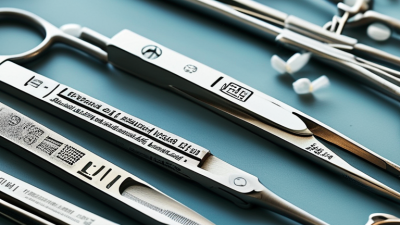
A practical evaluation starts with the complete product record. Check material specifications, intended use, cleaning instructions, warranty terms, and replacement schedules. Confirm that each instrument carries a usable Unique Device Identification (UDI) where required. The UDI should connect with batch, lot, or serial data. Receiving staff can then scan instruments into inventory and trace their movement through each procedure.

Traceability only works when data remains accurate. A missing digit can break the record. Ask suppliers how they update UDI data, manage design changes, and support recalls. Compare certificates with shipment documents and internal purchasing records. Regulatory requirements differ across markets, so local compliance review remains essential. It should not be treated as paperwork alone.

Our early cost model overlooked staff time spent cleaning unfamiliar instruments. That mistake changed the comparison. Buyers should test sample tools with clinical and sterile processing teams before placing larger orders. Record handling comfort, cycle compatibility, packaging damage, and repair response. The strongest decision combines verified compliance, dependable traceability, and realistic lifetime cost. Initial estimates are rarely perfect.