China Top Orthopedic Devices Manufacturers?

China’s orthopedic devices sector is expanding with stronger domestic engineering, broader hospital access, and stricter regulatory expectations. Grand View Research estimated the global orthopedic devices market at approximately USD 47 billion in 2023. MarketsandMarkets projected continued growth through 2028. Different reports use different product categories, however. Their figures should not be compared blindly.

China’s National Medical Products Administration has also strengthened review, registration, and post-market monitoring. This matters for implants, surgical instruments, trauma systems, and spinal products. A manufacturer may show advanced machining in a clean factory. That alone proves little. Buyers should examine NMPA registration, ISO 13485 certification, clinical evidence, sterilization controls, recall history, and hospital adoption. Supplier audits should include raw-material traceability and batch records. Small details can decide patient safety.

Dr. William J. Maloney, an orthopedic surgeon and former president of the American Association of Hip and Knee Surgeons, has described the purpose of joint replacement clearly: “The goal of hip replacement is to relieve pain and restore function.” That clinical priority should guide any assessment of China’s top orthopedic devices manufacturers. Low prices are attractive. They are not enough. A ranking based only on revenue may overlook design reliability, surgeon training, revision outcomes, and after-sales support. This is the uncomfortable part. Public data remains uneven, and some manufacturer claims require independent verification. The following guide therefore compares leading Chinese companies through technical capability, regulatory credibility, product focus, manufacturing quality, and evidence of real-world performance.
China Top Orthopedic Devices Manufacturers?

Definition and Scope of China’s Orthopedic Device Manufacturing Industry

China Top Orthopedic Devices Manufacturers?

China’s orthopedic device manufacturing industry covers companies that design, produce, test, and service products for bone and joint care. Its scope includes trauma plates, screws, spinal systems, joint replacement components, surgical instruments, and rehabilitation supports. Some manufacturers focus on one product family, while others operate across several clinical fields.

A capable manufacturer usually combines medical engineering with controlled factory processes. Engineers may review implant geometry, material strength, surface finish, and instrument compatibility. Production teams track machining, cleaning, packaging, and batch records. In a practical audit, buyers should inspect quality systems, supplier controls, sterilization validation, and complaint handling. Paperwork matters, but factory evidence matters more.

The best supplier depends on the device and target market. A trauma implant producer may need strong machining accuracy and flexible customization. A joint replacement manufacturer requires deeper testing, material expertise, and long-term clinical evaluation. Hospitals and distributors should also examine delivery consistency, technical training, and after-sales communication. Small details matter, such as readable lot codes and undamaged sterile packaging.

The boundary is not always neat. Some suppliers present broad catalogs but limited clinical support. Others offer strong engineering yet need better international documentation. That weakness deserves attention. A reliable evaluation should include facility visits, sample reviews, risk assessment, and independent verification where appropriate. Availability is useful, but safety and traceability remain central.

China Top Orthopedic Devices Manufacturers? — Definition and Scope of China’s Orthopedic Device Manufacturing Industry

China’s aging population is a major demand-side driver for orthopedic implants, trauma devices, spine products, joint-replacement systems, and related surgical instruments.

The population aged 65 and above increased from 190.64 million in 2020 to 220.23 million in 2024. This trend supports long-term demand for orthopedic devices, although population data should not be interpreted as manufacturer revenue or market size.

Source: National Bureau of Statistics of China, China Statistical Communiqué on National Economic and Social Development, 2020–2024. Population figures are reported values in millions.

Major Types of Orthopedic Devices Produced in China

China Top Orthopedic Devices Manufacturers?

China produces a broad range of orthopedic devices for hospitals, rehabilitation centers, and surgical practices. Major categories include fracture fixation plates, screws, intramedullary nails, external fixators, and spinal implants. These products support trauma care, bone reconstruction, and stabilization after injury.

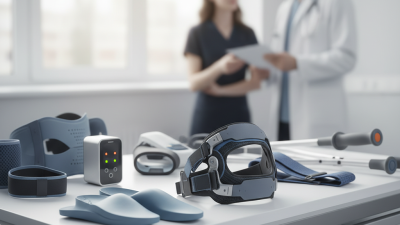
Joint replacement components are another important group. Manufacturers produce hip and knee implants, surgical instruments, trial components, and related accessories. They also make orthopedic braces, cervical collars, walking supports, and rehabilitation equipment. These devices often use stainless steel, titanium alloys, cobalt-chromium alloys, medical polymers, and composite materials. Material selection affects strength, weight, corrosion resistance, and patient comfort.

From supplier evaluations, dependable production involves more than modern machinery. It requires controlled machining, surface treatment, dimensional inspection, cleaning, packaging, and traceability. Many factories use documented quality systems and conduct tests for fatigue, hardness, sterility, and biological safety. Clinical suitability still needs careful review. A polished sample does not prove consistent batch performance.

The category is not flawless. A low price may hide weaker inspection or limited technical support. Buyers should examine production records, testing reports, regulatory documentation, and complaint-handling procedures. Communication matters too. Small specification changes can affect surgical fit, instrument compatibility, or recovery outcomes. China’s orthopedic manufacturing sector is capable and diverse, but responsible selection depends on evidence rather than attractive catalog images.

China Top Orthopedic Devices Manufacturers? - Major Types of Orthopedic Devices Produced in China

Major Device Type Representative Products Common Materials Typical Manufacturing Processes Primary Clinical Applications Frequently Referenced Standards
Trauma Fixation Devices Bone plates, cortical and cancellous screws, intramedullary nails, wires and pins Titanium and titanium alloys, stainless steel, cobalt-chromium alloys CNC machining, forging, investment casting, laser marking, surface finishing and passivation Fracture fixation, osteotomy, reconstructive and minimally invasive trauma surgery ISO 5832, ISO 10993, ISO 13485, ASTM F67, ASTM F136 and ASTM F138
Joint Replacement Implants Hip, knee, shoulder and other joint replacement components Cobalt-chromium alloys, titanium alloys, alumina or zirconia ceramics, ultra-high-molecular-weight polyethylene Precision machining, forging, casting, additive manufacturing, polishing, coating and sterilization End-stage osteoarthritis, traumatic joint damage and revision arthroplasty ISO 7206 for hip implants, ISO 14243 for knee implants, ISO 10993 and ISO 13485
Spinal Implants Interbody cages, pedicle screw systems, rods, plates and artificial discs PEEK, titanium alloys, cobalt-chromium alloys and stainless steel CNC machining, injection molding for polymer components, additive manufacturing and porous surface treatment Spinal fusion, deformity correction, degenerative disc disease and vertebral stabilization ASTM F2077, ASTM F1717, ISO 10993 and ISO 13485
External Fixation Systems Monolateral and circular frames, fixation clamps, Schanz pins and wires Stainless steel, titanium alloys, aluminum alloys and carbon-fiber-reinforced components CNC machining, tube processing, anodizing, passivation and modular assembly Complex fractures, open fractures, limb lengthening and deformity correction ASTM F1541, ISO 10993 and ISO 13485
Arthroscopy Devices Suture anchors, interference screws, cannulas, shavers and arthroscopic accessories Titanium, PEEK, bioabsorbable polymers, stainless steel and high-strength polymer sutures Micro-machining, injection molding, polymer processing, coating and cleanroom assembly Rotator cuff repair, anterior cruciate ligament reconstruction and meniscal repair ISO 10993, ISO 13485 and applicable ASTM implant-performance methods
Sports Medicine Soft-Tissue Implants Suture buttons, fixation tapes, ligament fixation devices and tendon repair systems Polyester, ultra-high-molecular-weight polyethylene, titanium and bioabsorbable polymers Textile braiding, precision molding, CNC machining, heat treatment and sterile packaging Ligament, tendon and meniscus repair, especially in knee and shoulder procedures ISO 10993, ISO 13485 and relevant ASTM mechanical-testing methods
Bone Graft Substitutes Calcium phosphate granules, porous blocks, bone fillers and synthetic graft materials Hydroxyapatite, beta-tricalcium phosphate, biphasic calcium phosphate and bioactive glass Wet chemical synthesis, sintering, granulation, freeze-drying and porous-structure processing Bone void filling, spinal fusion support and maxillofacial or orthopedic reconstruction ISO 10993, ISO 13485, ASTM F1185 and applicable calcium-phosphate test methods
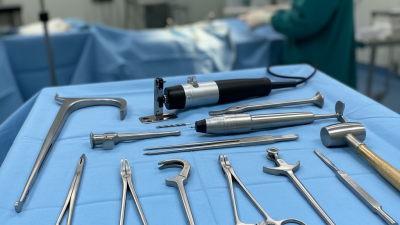
Orthopedic Surgical Instruments Bone saws, reamers, drill guides, forceps, retractors and implant-placement instruments Stainless steel, titanium alloys, aluminum alloys and engineering polymers CNC machining, grinding, laser cutting, heat treatment, electropolishing and ultrasonic cleaning Implant placement, bone preparation, fracture surgery and joint replacement procedures ISO 13485, ISO 7153-1, ISO 17664 and applicable sterilization standards
Orthopedic Rehabilitation Devices Braces, orthoses, walking aids, support splints and post-operative immobilization devices Thermoplastics, carbon-fiber composites, aluminum, stainless steel, foam and textile materials Thermoforming, composite lay-up, injection molding, textile fabrication and mechanical assembly Post-operative support, joint stabilization, mobility assistance and musculoskeletal rehabilitation ISO 13485, ISO 14971 and applicable product-specific safety and performance requirements
Note: The table summarizes major orthopedic device categories and commonly used materials, manufacturing methods and standards in China’s orthopedic-device supply chain. Exact regulatory classification and required testing depend on the intended use, design, sterilization method and applicable market.

Leading Categories of Chinese Orthopedic Device Manufacturers

China’s orthopedic device manufacturers mainly serve four leading categories: trauma fixation, joint reconstruction, spinal implants, and sports medicine. Trauma suppliers produce plates, screws, intramedullary nails, and external fixation systems. Joint specialists focus on hip and knee replacements, while spine manufacturers develop cages, rods, and minimally invasive instruments. Sports medicine portfolios often include anchors, interference screws, and arthroscopy tools.

The global orthopedic devices market reached about USD 47.4 billion in 2023, according to Grand View Research’s 2024 industry analysis. Its forecast indicates continued growth through 2030, supported by aging populations and rising orthopedic procedures. Fortune Business Insights also identifies joint reconstruction and spinal devices as major growth segments. China’s large patient base creates strong demand, but volume alone does not prove product quality.

Experienced buyers should examine NMPA registration, ISO 13485 certification, sterilization validation, and published clinical evidence. Manufacturing capability matters too. Inspect machining areas, surface finishing, packaging controls, and batch traceability. A reliable supplier should explain alloy selection, fatigue testing, and post-market monitoring without vague claims. The category boundaries are not perfect. Some factories combine trauma and spine production, yet their clinical experience may differ sharply. A polished catalogue can still hide weak evidence. That deserves careful reflection.

Manufacturing Standards, Certifications, and Quality Control

Reliable orthopedic device manufacturers build quality into every production stage, not only the final inspection. Their systems should follow recognized frameworks, such as ISO 13485 for medical device quality management and ISO 14971 for risk management. Market-specific requirements may also include regulatory registration, technical documentation, and controlled clinical evidence.

A professional factory verifies raw materials before machining. Inspectors review titanium or stainless steel certificates, dimensions, hardness, and surface condition. During production, calibrated gauges check holes, threads, angles, and tolerances. Finished implants may undergo fatigue, torque, corrosion, cleanliness, and packaging tests. Each batch needs traceability, from supplier records to operator names and inspection results. Sterile products require validated sterilization and sealed packaging controls.

Tips: Ask for current certificates, audit reports, sample inspection records, and calibration evidence. Visit the production area if possible. Check whether rejected parts are isolated and investigated. A certificate alone proves little.

Quality control is not flawless. A missed calibration sticker or unclear drawing can create serious risk. Strong manufacturers use internal audits, corrective actions, employee training, and documented root-cause reviews. They should also explain weaknesses honestly. That matters. Careful buyers should compare real process evidence, not polished claims.

How to Evaluate and Select a Chinese Orthopedic Device Manufacturer

Choosing among China’s top orthopedic device manufacturers requires more than comparing prices or factory photos. Assess the manufacturer’s quality system, engineering depth, and experience with your device category. Request valid ISO 13485 certification and market-specific regulatory documents. Verify them through official databases or certification bodies. Review design records, risk assessments, biocompatibility reports, and sterilization validation. These documents reveal whether quality is built into production or added later.

Tips: Arrange a video or onsite audit. Inspect incoming materials, CNC areas, cleanrooms, packaging, and final inspection stations. Ask to trace one sample from raw material to shipment. Speak with the quality manager, not only the sales representative. Also confirm minimum order quantities, tooling ownership, lead times, complaint handling, and spare-part support. A low quote may exclude testing, packaging, or future engineering changes.

Evaluate samples under realistic clinical conditions, when legally appropriate. Check surface finish, dimensions, markings, packaging integrity, and instructions for use. Ask for batch records and stability data for sterile products. A polished presentation can still hide weak traceability. That is easy to miss. Supplier selection should include written acceptance criteria, audit rights, change-notification duties, and clear responsibilities for nonconforming products. Communication matters too, although it is difficult to measure before a problem occurs. A capable manufacturer explains limitations openly and provides evidence instead of promising perfection.