What Are Orthopedic Surgical Tools and How Are They Used?

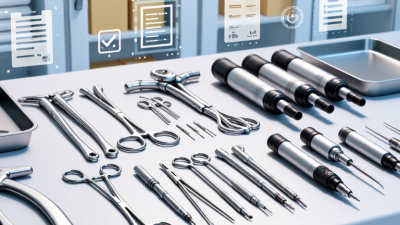
Orthopedic surgical tools are precision instruments used to examine, prepare, repair, and reconstruct bones, joints, ligaments, and surrounding tissues. They include bone saws, drills, retractors, forceps, osteotomes, rongeurs, measuring guides, and implant-specific instruments. Each tool has a defined purpose. A retractor gently holds tissue aside. A drill creates a controlled channel. A torque-limiting driver helps prevent excessive force during fixation.

These instruments are not simply metal objects on a tray. Their design affects visibility, accuracy, tissue protection, and surgical workflow. A surgeon may select a power saw for a joint replacement, then use cutting guides to shape bone precisely. In trauma surgery, clamps and reduction tools help restore alignment before plates or screws are secured. Small differences matter. A few millimeters can influence stability, movement, or implant positioning.

Sir John Charnley, a major figure in modern joint replacement, stated, “The surgeon must be a craftsman, and the operation must be planned as carefully as any engineering project.” That principle explains why orthopedic surgical tools require training, inspection, and careful handling. Nurses, technicians, and surgeons must understand sterilization requirements, compatibility, maintenance, and safe use.

Still, tools do not guarantee good outcomes. Human judgment remains essential. Instrument systems can also create confusion when labels, sizes, or settings are unclear. This article examines common orthopedic surgical tools, their functions, and their clinical applications. It also considers limitations that deserve honest attention, including learning curves, equipment wear, and the risk of relying on technology without understanding anatomy.
What Are Orthopedic Surgical Tools and How Are They Used?

What Orthopedic Surgical Tools Are and What They Are Designed to Do

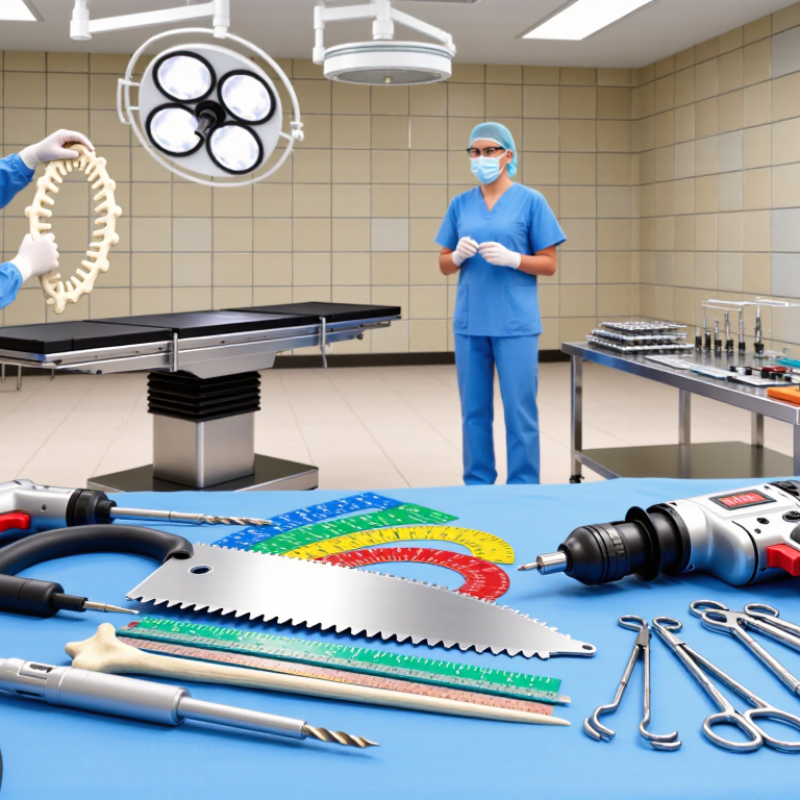
Orthopedic surgical tools are specialized instruments designed to handle bone, joints, and surrounding soft tissue with controlled force. They include bone saws, drills, retractors, clamps, osteotomes, and measuring guides. Each tool has a defined purpose. A saw cuts bone smoothly, while a drill creates precise openings for fixation. Retractors hold tissue aside and improve visibility during demanding procedures.

Their design reflects the mechanical challenges of orthopedic surgery. Strong handles improve grip through gloves. Fine tips support accurate placement. Depth markings help surgeons judge how far an instrument enters bone. Some tools are rigid for impact, while others are flexible enough to protect nearby tissue. The operating team selects instruments according to the patient’s anatomy, the planned procedure, and the surgeon’s technique.

Cleanliness and reliability are equally important. Instruments must be inspected, sterilized, and checked for damage before use. A loose hinge or worn cutting edge can affect control. Small details matter. No instrument is perfect for every situation. A tool that works well on dense bone may feel excessive near delicate structures. This requires judgment, training, and careful adjustment during surgery. Even experienced teams review their choices, because efficient equipment use should never replace thoughtful clinical decision-making.

What Are Orthopedic Surgical Tools and How Are They Used?

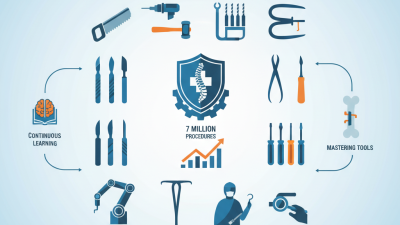
Orthopedic surgical tools are specialized instruments used to expose tissue, cut or remove bone, create holes, measure anatomy, position implants, and stabilize fractures. The chart shows the number of representative tool examples assigned to each primary function for comparison; it does not represent market share or clinical frequency.

How Orthopedic Instruments Are Classified by Surgical Function

What Are Orthopedic Surgical Tools and How Are They Used?

Orthopedic instruments are classified by surgical function, not only by shape or size. Cutting instruments remove bone or soft tissue. Examples include osteotomes, bone saws, and surgical drills. Their edges must remain precise, because a rough cut can damage nearby tissue or weaken fixation.

Grasping and holding instruments secure bone, wires, or tissue during preparation. Clamps and reduction forceps help align fractured segments before fixation. Retractors hold muscle and skin away from the working area. Even a small change in blade pressure can affect visibility and tissue safety. Position matters.

Probing and measuring instruments help surgeons assess depth, alignment, and implant placement. Depth gauges, rulers, and trial components provide practical information before permanent fixation. Screwdrivers, insertion guides, and torque-limiting tools then support controlled placement. Powered instruments improve efficiency, but they demand steady handling, irrigation, and close attention to heat.

These categories often overlap. A forceps may hold and reduce bone at the same time. The classification is useful, but it is not perfect. Instrument selection depends on anatomy, fracture pattern, surgical approach, and the surgeon’s training. Sterile processing staff also inspect hinges, tips, insulation, and cutting edges before use. A familiar tool can still fail when overlooked. That small risk deserves respect.

Which Tools Are Used to Prepare Bones and Joints

Orthopedic surgical tools help surgeons shape, clean, and stabilize bones and joints during reconstruction. Preparation begins with exposure, measurement, and careful protection of nearby soft tissue. A sterile scalpel and electrosurgical device may improve access, while retractors hold tissues safely aside. The exact sequence depends on the injury, anatomy, and planned procedure.

Oscillating saws create controlled bone cuts with thin, precise blades. Osteotomes and mallets remove small sections when a saw is unsuitable. Rongeurs remove irregular edges, while bone rasps smooth prominent areas. Curettes scrape damaged tissue from a joint surface or bone cavity. Surgeons use drills and guide wires to create accurate channels for fixation devices. Reamers gradually enlarge a canal, reducing the chance of removing too much bone.

Broaches shape the inner bone space for a replacement component during joint reconstruction. Trial components test alignment, movement, and stability before final fixation. Depth gauges and calipers support measurements, but numbers never replace clinical judgment. Irrigation helps control heat, while suction keeps the surgical field visible. Experienced teams still reassess frequently because bone quality may differ from scans. No instrument works perfectly in every case. A measurement can look exact, yet the bone may respond differently under load.

How Surgeons Use Instruments for Repair, Alignment, and Implantation

Orthopedic surgical tools help surgeons repair damaged bone, restore alignment, and place implants accurately. Their selection depends on the injury, bone quality, and planned procedure. The World Health Organization reported in 2022 that musculoskeletal conditions affect about 1.71 billion people worldwide. That burden makes controlled, repeatable instrumentation essential in operating rooms.

For fracture repair, surgeons may use reduction forceps, clamps, drills, and guide wires to hold fragments while screws or plates are positioned. Saws and osteotomes remove damaged bone during joint replacement. Reamers prepare the bone canal, while trial implants help assess fit, stability, and movement before final implantation. Alignment guides provide reference points, but they do not replace anatomical judgment. Small errors matter.

During implantation, inserters deliver the component, and torque-limiting drivers help control fixation force. Measurement tools check depth, angle, and component size. The Bone and Joint Decade’s United States burden report estimated musculoskeletal conditions cost nearly 980 billion dollars in 2016, including treatment and lost productivity. That figure supports investment in training, sterile processing, and instrument quality systems. Yet equipment alone cannot guarantee a good outcome. Bone variation, visibility, positioning, and fatigue can change decisions quickly. The difficult truth is simple: precision is shared between the tool, the team, and the surgeon’s judgment. Overreliance on guides can also become a weakness.

How Orthopedic Tools Are Selected, Sterilized, and Maintained

Orthopedic surgical tools are selected according to anatomy, procedure, tissue density, and implant design. A rongeur may remove bone, while a retractor protects soft tissue during exposure. Selection should also consider grip comfort, jaw alignment, working length, and compatibility with imaging equipment. The FDA emphasizes that reusable devices must be reprocessed according to validated instructions, not personal habit. Small errors matter.

Cleaning begins at the point of use. Staff should remove visible soil promptly and keep instruments moist until manual or automated cleaning starts. Hinged tools must be opened, and detachable parts should be separated. AAMI ST79 recommends routine biological monitoring and specific monitoring for sterilization loads containing implants. Steam sterilization remains common for heat-resistant instruments, but low-temperature methods may suit sensitive components. WHO’s Global Guidelines for the Prevention of Surgical Site Infection report infection rates of about 11% in low- and middle-income surgical patients, making reliable processing essential.

Maintenance continues after sterilization. Technicians should inspect cutting edges, ratchets, insulation, joints, and surface corrosion under adequate lighting. Damaged tools need quarantine, not quiet reuse. Lubrication must be compatible with the sterilization process. Records should connect each tray with cleaning, sterilization, inspection, and release checks. Human judgment still fails sometimes. A checklist helps, but it cannot replace training or careful observation. These practices align with CDC’s Guideline for Disinfection and Sterilization in Healthcare Facilities and AAMI ST79.